


Faculty & Research

Click on the image to watch the video on YouTube.

Global Modular Courses

Wharton’s Global Modular Courses—an Experiment in Innovative Global Learning

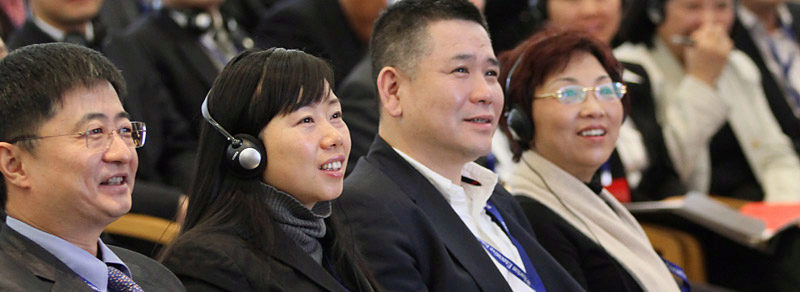
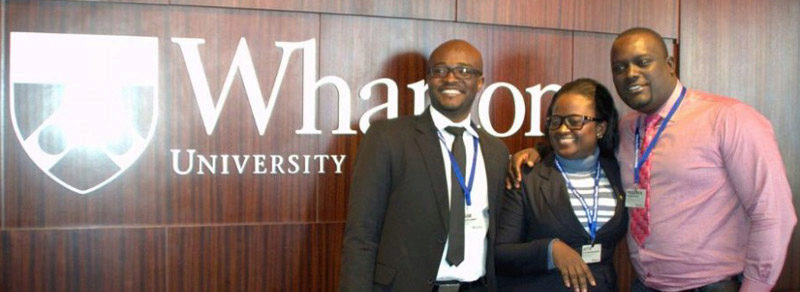
“Tell me and I forget. Teach me and I remember. Involve me and I learn.” — these words spoken by Benjamin Franklin, the founder of the University of Pennsylvania, more than 250 years ago, still ring true today. In the spirit of learning and innovation, the new Global Modular Courses (GMCs) unveiled by the Wharton School during the winter and spring breaks of 2011 did just that. The first eight courses transported undergraduate, full-time MBA and MBA for Executives (WEMBA) students, as well as some alumni, beyond Wharton’s Philadelphia and San Francisco classrooms and gave them an opportunity to get truly involved in learning material pertinent to a particular geographic region around the world.

The idea of the GMCs is to expose students to a unique combination of local immersion, course concepts and emerging business issues.  The topics and locations of these courses were chosen to give students first-hand exposure to business challenges and opportunities in regions undergoing rapid change – for example, energy and infrastructure in Brazil, global supply chain management in China, and marketing in emerging economies such as India and China. In addition, the GMCs enable students to work across degree programs (undergraduate, full-time MBA and WEMBA) and schools (with students from host institutions).  Planning for these courses requires the development of new teaching materials, access to live cases from the region, and the creation of a new, intensive learning format.

During the 2010-11 academic year, eight global modular courses were offered, each representing a substantial investment of faculty time in new course development:

  • Building Future Markets in Cape Town, South Africa,
  • Finance in Europe in London, UK,
  • Global Supply Chain Management in China in Shanghai, Shenzhen & Hong Kong, China,
  • Innovation in India’s Healthcare Sector in Hyderabad, India,
  • Managing in Emerging Economies: Energy & Infrastructure in Brazil in Rio de Janeiro, Brazil,
  • Marketing in Emerging Economies: Understanding and Marketing to the Chinese Consumer in Beijing, China,
  • Marketing in Emerging Economies: Understanding and Marketing to the Indian Consumer in Mumbai, India,
  • Necessity and Experimentation: Lessons from Israeli Innovation in Herzliya, Israel.

Each course was offered in an accelerated format of up to one week duration. Almost 300 Wharton students enrolled in these courses, and represented a good mix across our programs.

The GMCs offer students a new and different kind of global learning opportunity compared to the numerous country and regional treks, as well as the Global Immersion Programs (GIPs) familiar to most Wharton students. GMCs offer their participants a unique opportunity to study abroad for 3-6 days by taking a course tied specifically to the geographic location of relevance to the subject being studied. The diversity of the student body coming from Wharton’s programs, which normally don’t have many opportunities to interact with one another on campus, as well as each course’s ties to a local partner university, and the opportunity to bring to the classroom prominent leaders working in these regions, made GMCs extremely dynamic and exciting learning experiences for everyone involved.

Student evaluations of these courses have been extremely positive despite their experimental design and delivery. Every student whom we interviewed from four of the eight pilot courses expressed extreme satisfaction with the course taken and a ready desire to do them again, whether as a continuing student or as an alum. The following describe four of these courses in greater detail.

Building Future Markets

Many students interviewed about the “Building Future Markets” course taught by Professor Ian MacMillan during five days of this year’s spring break commented on how they would like to see Wharton doing more of these types of courses in an effort to leverage its international scope and presence. Twenty-three Wharton students and Wharton alumni participated in this course. Wharton’s partner school in Cape Town was University of Stellenbosch Business School (USB) and eight USB students also participated in this GMC from the South African side. This course required teamwork among Wharton, South African USB students and African Wharton alums, as well as a collaboration among the students from Wharton undergrad, MBA and WEMBA programs for the final project. This proved to be a big draw for the students. In fact, for one undergraduate Wharton student the exposure to WEMBA students in this course made him consider doing an executive MBA in the future.

This GMC tied the theoretical material taught to the students in the mornings, to the application of that theory in the afternoons by Senior Executives who had led their firms’ entry into emerging markets: financial services into India, beer into China, telecom equipment and retail groceries into Africa. According to the students, the speakers were diverse, interesting and extremely valuable in their breadth of experiences and connection to the course content. This approach made the learned information “stick” much better than it would in a regular classroom. Additionally, lecturers from four South African universities delivered lectures on strategy, finance, logistics, and ethics with a specific focus on emerging market challenges.

Many students interviewed saw a tremendous amount of value in studying how to operate in an emerging market versus a developed one and the unique challenges that this would present for any industry. The importance of infrastructure was highlighted, as well as some surprising learnings that someone unfamiliar with the emerging markets would not necessarily be contemplating. An example of the types of team projects that the students produced as an output of this course was a business plan for creating a network of car servicing workshops in Angola and all the opportunities and challenges that this would present for the firm.

“This course was a phenomenal opportunity that every Wharton student should have.” — was a predominant theme in our conversations with the students. According to one student, this GMC actually “revolutionized” the way that he looks at risk, which is applicable to any industry and any market and is in fact, knowledge that will help him in the future regardless of where his career takes him.

Managing in Emerging Economies: Energy & Infrastructure in Brazil

“Classes like this stand Wharton apart from other schools and in fact, should be part of the Wharton curriculum.” — was a heartfelt response to the “Managing in Emerging Economies: Energy & Infrastructure in Brazil” course, which was echoed by other equally enthusiastic participants in this intense five-day GMC in Rio de Janeiro during the winter break of 2011. Taught by Professors Mauro F. Guillén and Felipe Monteiro, with the Brazilian School of Public and Business Administration at Fundação Getúlio Vargas (FGV) as Wharton’s local partner, 48 Wharton and five FGV students participated in this course.

This GMC was a well-balanced combination of a rigorous in-class curriculum with company visits and speaker panels of executives working in Brazil on the issues relevant to the lectures. According to the students we interviewed, the quality of speakers was absolutely phenomenal and access to them was crucial for the students to really get a sense of how theory is implemented into practice. One speaker whom everyone mentioned was Eike Batista, a CEO of EBX and according to Forbes’ ranking in 2010, the 8th richest man in the world. The interactions with the speakers were facilitated by a unique structure of the course where case discussions in most instances were immediately followed by a meeting with a high-ranking executive from a particular company discussed in the case. This resonated as one of the biggest values of this course, as access to such speakers would have been a lot more problematic had the course taken place in Philadelphia. The availability of great speakers, as well as an opportunity to absorb the Brazilian culture on site, while in the context of energy and infrastructure, was truly unique. 

This course required students to write a 25-page individual research paper. Surprisingly this requirement did not diminish a waitlist for this course and the students whom we’ve interviewed all seemed to have enjoyed the intellectual rigor of the individual assignment. For instance, one such paper presented an analysis of the challenges and opportunities in the complicated Sino-Brazilian relationship. Another one gave an overview of the Brazilian hotel industry, especially in light of the upcoming FIFA World Cup in Brazil in 2014 and the Summer Olympics of 2016 to be hosted by Rio de Janeiro. Yet another one raised a question: “Is Brazil’s offshore construction industry ready to meet the country’s ambitious oil production targets?” given the development of Brazil’s recent “pre-salt” discoveries in the deep waters of the Santos Basin. Fascinating research generated by the rigor and excitement of the course.

Marketing in Emerging Economies: Understanding and Marketing to the Chinese Consumer

Twenty Wharton students and INSEAD exchange students traveled to Beijing during the spring break of 2011 to spend three intense days in the “Marketing in Emerging Economies: Understanding and Marketing to the Chinese Consumer” course taught by Professor Z. John Zhang. Wharton’s local partner was Guanghua School of Management at Peking University with Professor Rungting Tu as a faculty member on the Guanghua side. Forty Guanghua students also attended this course, adding to the richness of the overall experience and bringing a different perspective to the in-class discussions.

This GMC consisted of lectures, case studies, presentations by industry experts and a field trip to a retailing outlet in Beijing, giving students an opportunity to observe the differences between Chinese and American ways to market and sell goods based on the different shopping preferences for both groups. A team paper based on the student in-person observations at stores in Beijing served as a catalyst for the Wharton and Guanghua students to work together, which proved to be a great learning experience for both groups. Some examples of the papers that the students produced were “Differences in Retailing Outlets’ In-Store Marketing between China and the US/ Europe – Observations, Analyses, and Potential Explanations” and “Understanding and Marketing to the Chinese Consumer.” For most students the field trip was an invaluable experience where they got an opportunity to observe in real-time everything that they were learning in the classroom setting. This example of “theory coming to life” was instrumental in why students enjoyed this GMC.

The amazing diversity and quality of the guest speakers is something that stood out in all of our interviews with the students. Such high-profile and engaging industry experts as Dr. Wu Xiaobing, the Country Manager of China, Pfizer Inc., J. Samuel (Sam) Su, the President of the China Division for Yum! Brands, Inc., and an executive from Nielsen China, all spoke to students about their experiences, thus further linking theory with practice in a very tangible way.

In addition to studying consumer trends in China, Wharton students also served as cultural ambassadors of sort, at times breaking the existing preconceived notions and stereotypes between American and Chinese cultures. This of course, is a unique advantage of the GMCs and one that appeals to most students with a thirst for knowledge and an appetite for travel.

Necessity and Experimentation: Lessons from Israeli Innovation

For four days immediately following the New Year’s Eve celebration in January 2011, 24 Wharton students traveled to Herzliya, a city approximately 10 miles North of Tel Aviv to join a similar number of their MBA and undergraduate Israeli counterparts at the Interdisciplinary Center (IDC). The “Necessity and Experimentation: Lessons from Israeli Innovation” course taught by Professors Stephen Sammut, Yoram Wind and Josh Eliashberg focused on innovation in the setting of Israel, a country that itself is a product of innovation driven by necessity.

How can you be innovative about innovation? What about Israel makes it a prime incubator for start-ups? What is the Israeli perspective on business?—these were some of the questions that this course addressed during an intense schedule. The students attended lectures by both Wharton and IDC professors, met the entrepreneurs whom they later consulted for their final project, visited a New Generation Technology Incubator, known for its mix of Arab-Israeli entrepreneurs, attended venture capital and entrepreneurial panels of speakers, as well as a talk titled “The Peace Process: Fresh Thinking Wanted” by Gilead Sher, a co-chief negotiator in 1999-2001 at the Camp David Summit and the Taba talks. A significant part of the students’ grades was allocated to their contributions to the course blog during their stay in Israel, which gave them an opportunity to generate, share and discuss ideas pertaining to the course material, a perfect setting for innovation to flourish.

We heard a lot of positive feedback from IDC and Wharton students that one of the biggest values of this course, was an opportunity for the students to interact with each other across schools, specifically through their work on a final project in assigned teams, where both schools were equally represented. For their final project, each team essentially conducted a mini-version of the Field Application Project where students consulted Israeli innovative entrepreneurs on overcoming a set of challenges or problems. Although highly confidential in nature due to the sensitive proprietary information of the start-ups, the projects included market planning, competitive analysis, partnering, capitalization strategy or a combination of some or all of these.

“Best course I have taken at Wharton!” — has been an overwhelming student response to this course, which gave Wharton students an opportunity to really study Israeli innovation by actually being there, listening to Israeli innovators and entrepreneurs, and interacting with their Israeli peers, which all tied to the strong academic component of the course prior to, during and after their stay in Israel. One student told us that this course made him want to become an entrepreneur, while another one actually started a business that was under consideration for a while, as this course inspired this student to finally “take the entrepreneurial plunge.” That is pretty high praise for a course focused on innovation.

Benjamin Franklin once said that: “An investment in knowledge pays the best interest.” As such, all of the GMCs incurred additional costs to the students who had to pay for their own travel expenses and also had to forfeit a part of their winter or spring break in order to participate in them. When asked if the courses were worth it, the answer was an overwhelming “YES!” as everyone whom we’ve interviewed assured us that they would absolutely take another GMC either as a student or as an alumnus/a.

The GMCs in their pilot offering were a success, which many students would love to see replicated. These courses offer a unique opportunity for the Wharton students and there seems to be a clear demand for them among the student body. Learning “by osmosis” in any given country where the subject matter is closely tied to a particular geography, collaboration with students from different programs within Wharton, as well as with the local partner schools, and opportunities for innovative research for the faculty members who head these courses, all indicate a right time for Wharton to use GMCs as a key differentiating factor among its peers.

“Innovation distinguishes between a leader and a follower,” once said a very successful businessman and innovator from a more recent time. Benjamin Franklin would likely have agreed with him and it is a motto that both the University of Pennsylvania and the Wharton School have followed. GMCs are the most recent example of this school of thought and if history is any indicator, Steve Jobs’ approach to innovation has not failed him yet. Wharton has always been at the forefront of innovative education and maybe one day GMCs will be as ubiquitous as iPhones or maybe even iPads.

Article by Nathalie Manevich, WG '06